Care & Maintenance
Andersen® windows and patio doors are designed for beauty, efficiency and convenience. To keep Andersen® products attractive and functioning efficiently, you should clean them occasionally. In most regions, products may require cleaning only a few times per year. However, some coastal areas, industrial areas or agricultural areas contain high amounts of airborne particles and may require more frequent cleaning.
For Andersen® or EMCO® storm door care and maintenance tips, visit the Support Center at the Andersen Storm Door Parts Store.
For information on understanding condensation and tips on preventing drafty windows or patio doors click here.
Use extreme care when working around window openings. Never leave a window opening unattended when children are present. Falling from a window opening may result in injury or death.
Use of ladders and/or scaffolding and working at elevated levels may be hazardous. Follow equipment manufacturer’s instructions for safe operation.
Use extreme caution when working around window and door openings. Injury and/or falls could occur.
How to Clean your Glass
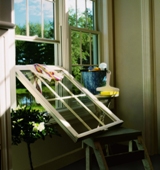
Before cleaning the exterior surface of glass it is important to identify if you have Andersen® 400 Series products that come standard with High-Performance™ Low-E4™glass. This type of glass has a low-maintenance exterior coating and removable protective film. The low-maintenance exterior coating is highly durable but may be damaged if abrasive or hard objects are used for cleaning.
To learn how to identify the vintage of windows you have, click here
 |
|
To remove dust, dirt, smoke, film, soot and salt spray, use a mild detergent and water solution and a soft cloth or brush. To remove heavy dirt or grime from glass, first wipe loose debris from the glass surface with a soft, dry cloth. Then apply a cleaning solution, such as mild soapy water, vinegar or a liquid window cleaner, and wipe in a circular motion. Remove cleaning solution with a squeegee or a clean, lint-free cloth. As a general practice, you should never clean glass in direct sunlight.
Note: After cleaning your glass, we recommend to lubricate all moving parts with a multi-purpose dry lubricant spray. Oily lubricants or harsh abrasive cleaners are not recommended. Click here to see our dry lubricant offering
How to Clean Your Grilles and Insect Screens
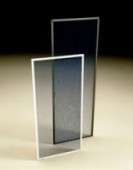 | To remove dust, dirt, smoke, film, soot and salt spray from grilles, use a mild detergent and water solution and a soft cloth or brush. To remove grease, oil or industrial solids, you may need to use stronger solutions such as Mr. Clean®, Soft Scrub® or rubbing alcohol. Avoid contacting glass surface with any abrasive materials. Conventional insect screens and premium TruScene® insect screens are best cleaned with a soft cloth or sponge. Regular care and maintenance of Andersen® insect screens is recommended. Clean the insect screen cloth using mild soap, fresh water and a soft brush. After cleaning, rinse thoroughly with fresh water. Your gliding patio door insect screen and track are best cleaned with soapy water and a garden hose. A soft-fiber brush can be used to remove any debris. After cleaning, thoroughly rinse the insect screen and track to remove all soap residue. |
Maintaining Andersen® Hardware
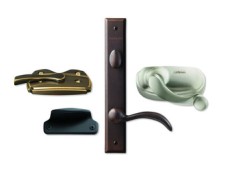 | Your Andersen® hardware has been manufactured of high-quality, fine metal. Fine metal requires periodic attention to maintain its beauty and characteristics. Climate, location, and exposure to corrosive environments such as industrial areas, pesticides, herbicides, or salts can affect the hardware’s beauty and characteristics. • DO NOT use or apply harsh chemicals, abrasives and/or cleaners. Product damage could occur. • DO NOT refurbish hardware. Contact a professional hardware restorer for refurbishing. |
Bright Brass, Antique Brass, Satin Nickel, Distressed Nickel, White or Stone
• Wash hardware using a mild detergent and a soft cloth. Andersen bright brass and satin nickel hardware finishes are protected with a physical vapor deposition (PVD) coating process resulting in a beautiful finish that’s resistant to scratching, corrosion and tarnish. Andersen satin nickel and bright brass are covered by the same 10-year transferable limited warranty.
Polished Chrome or Brushed Chrome
- • Wash hardware using a mild detergent and a soft cloth. Avoid abrasive cleaners, pads, or brushes.
• Polish chrome finishes using a commercially available chrome polish following manufacturer’s instructions.
Oil-Rubbed Bronze or Distressed Bronze
• Handling and frequent use create the bronze patina that is the hallmark of the oil-rubbed bronze and distressed bronze finishes. Oil-rubbed bronze and distressed bronze are “living finishes” with no protective coating. With use, your hands will polish away the darker material exposing the bronze beneath.
• The appearance of these finishes will vary depending on usage and environmental conditions.
• Occasionally apply light mechanic oil to deepen the color and sheen of the product. Cover metal parts with oil entirely, allow the oil to stand for a few minutes and then gently rub off excess using a clean cloth.
Note: For additional hardware performance and warranty information visit our website: www.andersenwindows.com
How to Clean the Outside Frame of Your Window
To remove dust, dirt, smoke, film, soot and salt spray from the outside of your window, use a mild detergent and water solution and a soft cloth or brush. To remove grease, oil or industrial solids, you may need to use stronger solutions such as Mr. Clean®, Soft Scrub® or rubbing alcohol. Avoid contacting glass surface with any abrasive materials.
Note: After cleaning, lubricate all moving parts with a light oil or dry silicone spray. Lubricants or harsh abrasive cleaners are not recommended. Click here to see our dry lubricant offering
Understanding Condensation
Have you wondered why is there condensation on your window or patio door glass? View this helpful video on understanding condensation.
|
Adjusting your Inswing Hinged Patio Door
Your Andersen® hinged patio door is designed to give you years of trouble-free operation. It can be adjusted to help you get the best possible performance.
|
Adjusting your Outswing Hinged Patio Door
Your Andersen® outswing hinged patio door is designed to give you years of trouble-free operation. It can be adjusted to help you get the best possible performance.
|
Adjusting your Gliding Patio Door
Your Andersen® gliding patio door is designed to give you years of trouble-free operation. It can be adjusted to help you get the best possible performance.
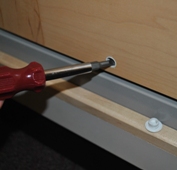 | If your Andersen® gliding patio door operating panel is moving stiffly, it may be dragging slightly because the door is out of adjustment. To adjust it, remove the caps located on the interior bottom rail of the door, insert a flat blade screwdriver, and turn the screwdriver clockwise to raise the panel and counterclockwise to lower the panel (see image). Move one notch at a time, checking the operation of the door panel as you go. Close the panel to within one inch of the side jamb and check for uniform opening from top to bottom. Replace caps when adjustment is complete.After adjusting the rollers for operation and checking for an even reveal you may need to adjust the latch receiver. The reachout lock mechanism is designed to pull the operating panel into the weather-stripping for optimal contact. Close the operating panel slowly. When the pin on the receiver make contact with the button on the deadlock, slowly turn the inside thumb latch to the lock position. The latch should engage the latch receiver smoothly and pull the panel into the side jamb for a snug fit. Click here to see all our Maintenance Guides |
Thank you for visiting our parts store. Andersen Windows is committed to customer satisfaction. To meet our customer's needs we continually update our site with new product offering, care & maintenance tips and "How To" videos. Please visit us again soon. Thank you for using Andersen Windows.